
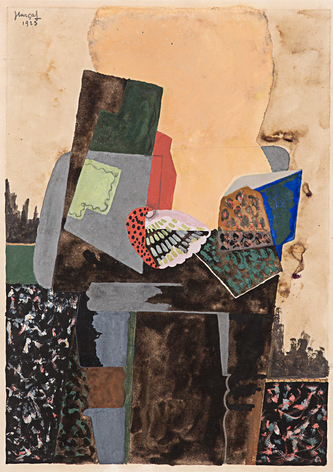
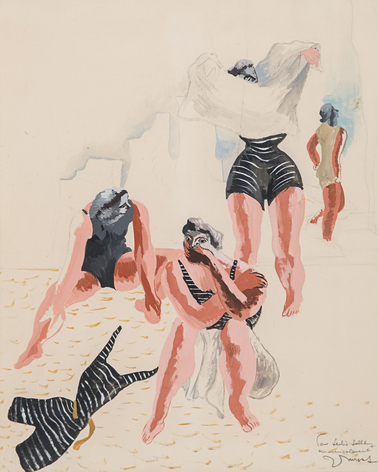
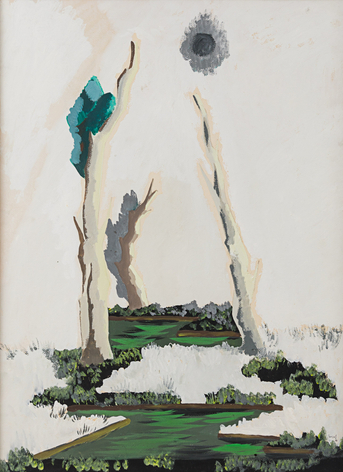
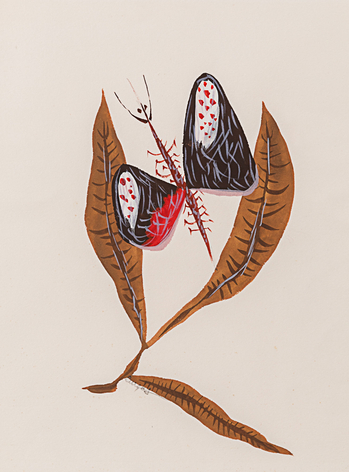
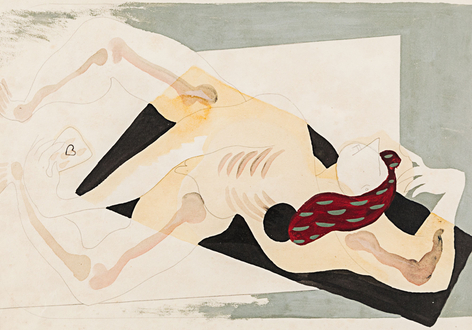
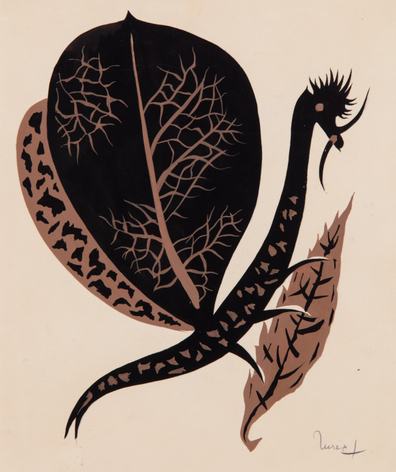
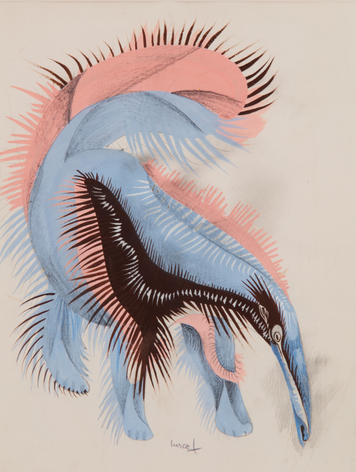
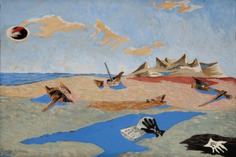
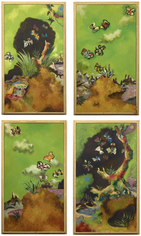

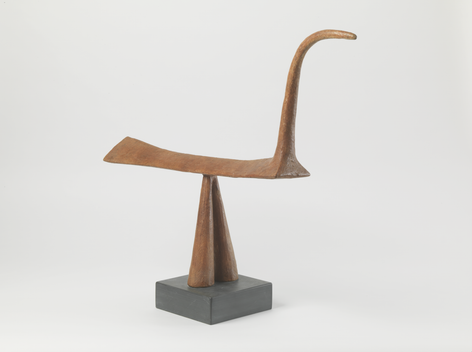
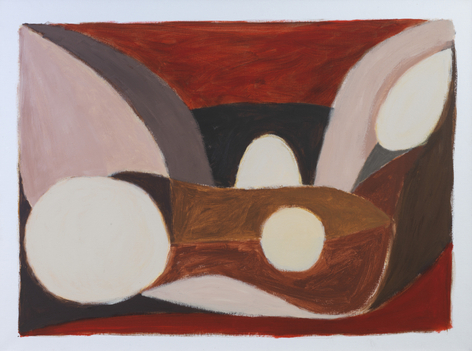
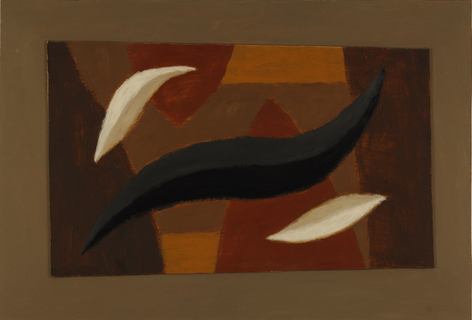
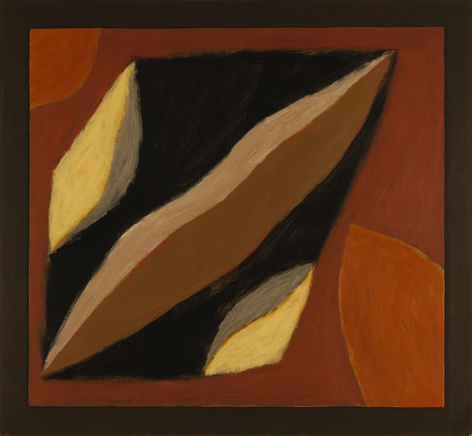
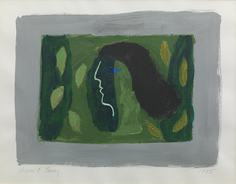
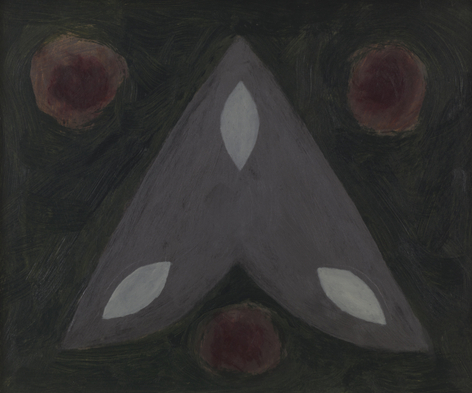
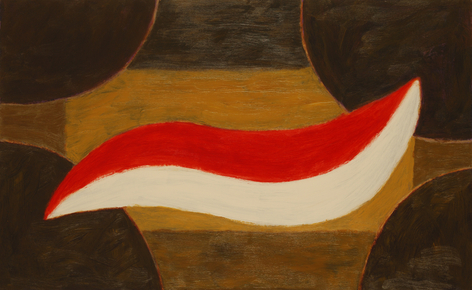
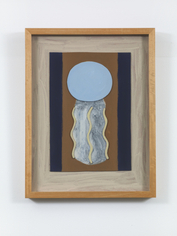
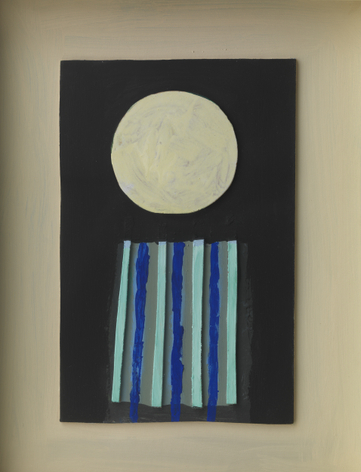
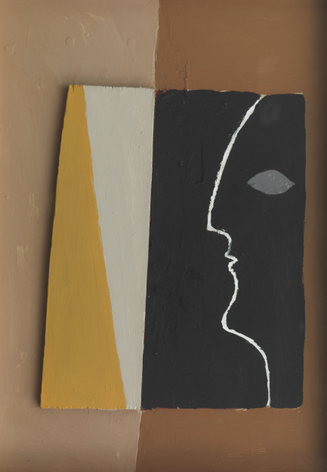
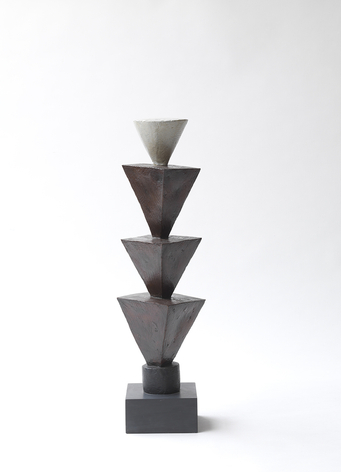
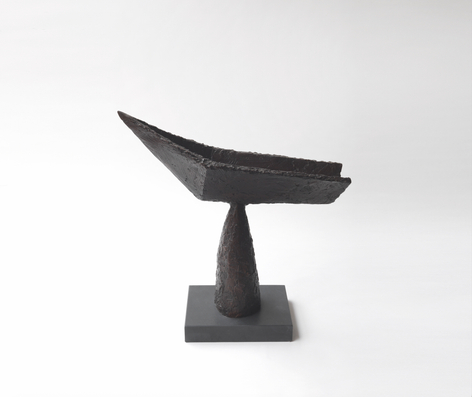
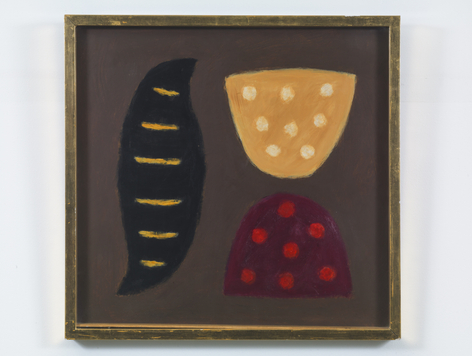
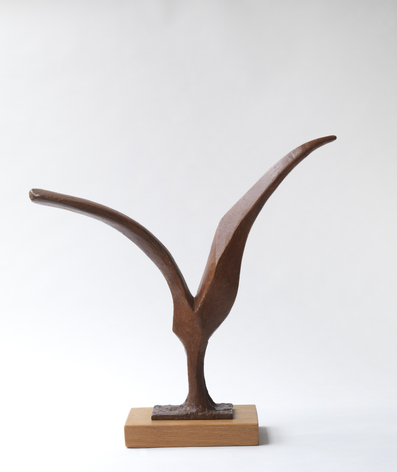
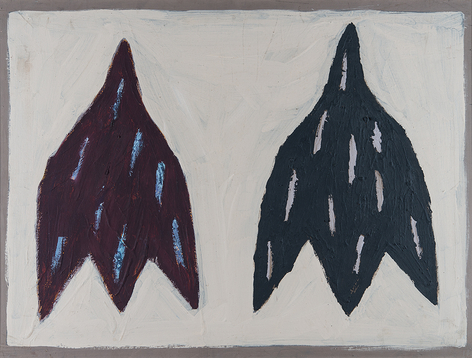
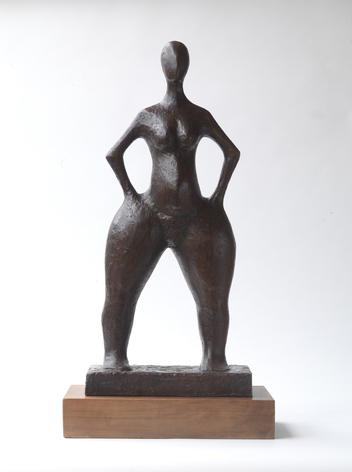
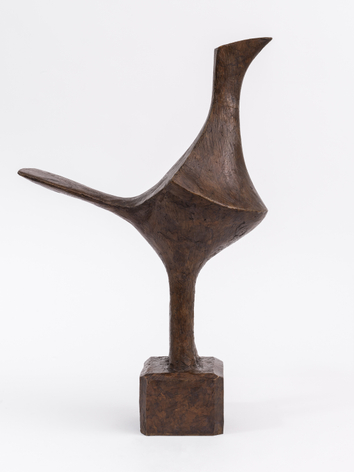
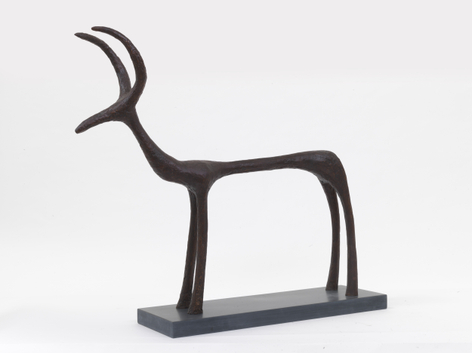
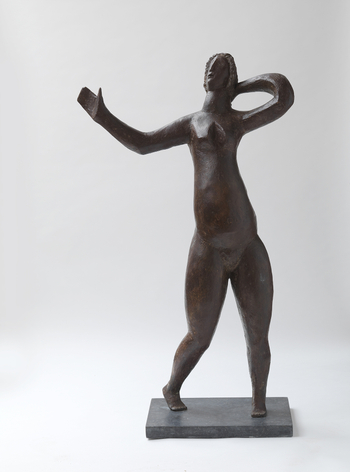
Rosenberg & Co. is pleased to announce Jean Lurçat | Breon O’Casey, an exhibition that brings together the paintings of two artists whose creative philosophies, developed decades apart, reveal a profound shared sensitivity to nature, form, and material. While both O’Casey and Lurçat worked across a wide range of mediums, this exhibition showcases their paintings, alongside a selection of O'Casey's sculptures, highlighting the visual and conceptual connections that link their practices.
While studying at the Anglo-French Art School in London, O’Casey, encountered both the recently discovered Lascaux caves which “was like a thump on the head with a mallet” and the home and workshop of Jean Lurçat where he recalls “standing in front of a tapestry that had just come back and knowing that one day I too would weave.”
O’Casey’s initial inspiration was rooted in Lurçat’s tapestries, but the influence extended beyond medium. O’Casey inherited Lurçat’s clarity of design, his embrace of material limitations, and his ability to observe, simplify, and reimagine the natural world. These principles would quietly accompany O’Casey’s creative life in Cornwall, where he worked within the vibrant St. Ives community of painters, potters, and sculptors.
Both O’Casey and Lurçat rejected rigid boundaries between fine art and craft, pursuing many mediums throughout their careers . Lurçat—central to the 20th-century revival of modern tapestry —approached painting with the same graphic intensity and symbolic clarity that defined his textile work. His imaginative universes contrast and complement O'Casey's quiet studio practice, in which remembered natural forms are reduced to their essential shapes through both painting and sculpture. O’Casey’s work emerges from an intuitive process, the artist often noting that he did not overthink his subjects, but simply created, allowing instinct and memory to guide him.
By placing their work in dialogue, Jean Lurçat | Breon O’Casey highlights both artists’ commitment to filtering the world around them, pursuing a practice combining abstraction with observation.
About Jean Lurcat
French artist Jean Lurçat (1892–1966) studied at the Académie Colarossi and emerged from the Paris art world. Early encounters with Cubism and other avant-garde movements helped shape the bold, symbolic style that would define both his paintings and his celebrated tapestry work. Lurçat exhibited widely throughout his career, showing regularly at Jeanne Bucher’s gallery in Paris and presenting major solo exhibitions abroad at the Flechtheim Gallery in Berlin (1931) and the Pierre Matisse Gallery in New York (1933). His work today can be found in major collections, including the Jean Lurçat and Contemporary Tapestry Museum, the National Gallery of Art in Washington, D.C., and the Museum of Modern Art in New York.
About Breon O’Casey
British artist Breon O’Casey (1928–2011) studied at Dartington Hall School and the Anglo-French Art Centre in London before becoming an integral figure in the St. Ives art community. A multidisciplinary artist dedicated to simplicity and balance, his practice includes painting, sculpture, jewellery, printmaking, and weaving. Today, O’Casey’s work is held in major public collections including Tate, the Victoria and Albert Museum, Kettle’s Yard, the Hermitage Museum, the Museum of Fine Arts, Houston, and the Pforzheim Museum in Germany.
O'Casey images via Steve Russell Studios.